

There are moments when a nation either tells itself the truth, or it looks away.
“An innocent white teenager’s dying pleas were dismissed by police on camera, a young woman stabbed, ministers, including Keir Starmer, David Lammy and Shabana Mahmood they remain silent, and the mainstream media are not outrage – the public deserves answers.
How many more lives will be taken before Britain’s leaders protect the indigenous people of these Isles and enforce the law against illegal immigrants?
Remember the so-called asylum seeker found guilty of the murder of a 27‑year‑old hotel worker Rhiannon Whyte, who died three days after being stabbed 23 times with a screw driver at Bescot Stadium station in Walsall in October 2024.”
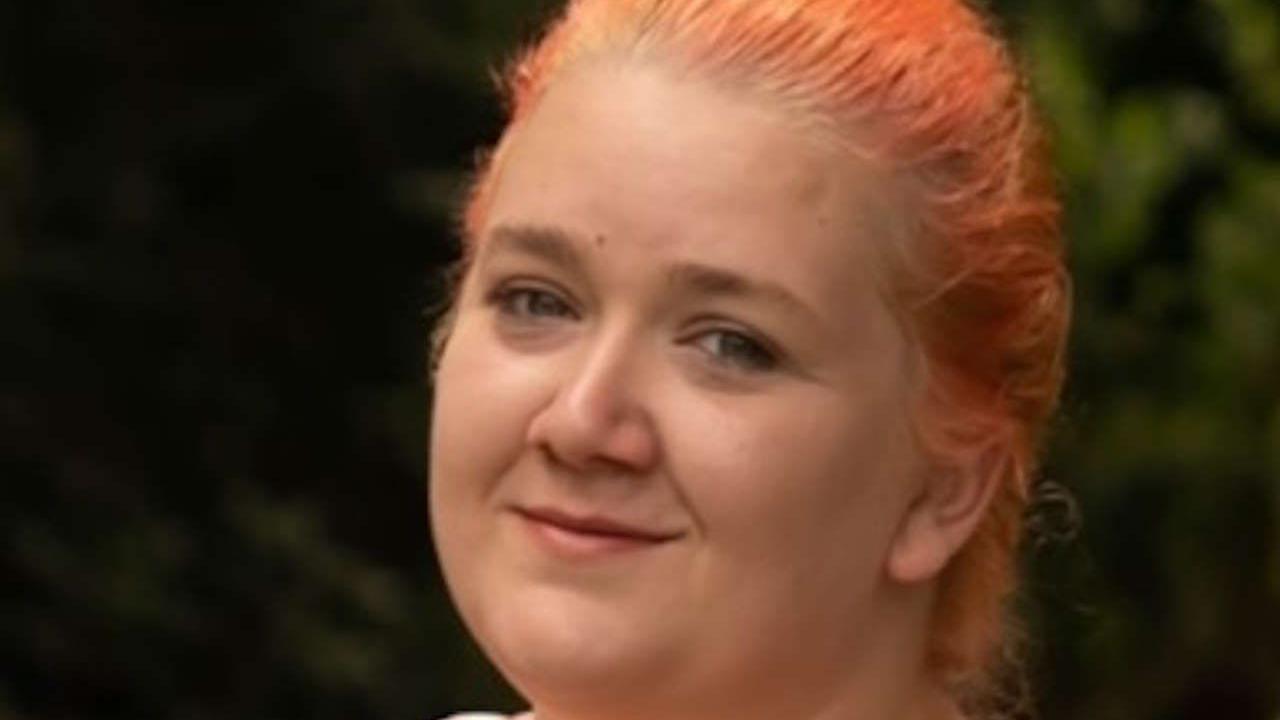
Henry Nowak’s last minutes, the failures we all saw, and the silence that shames Britain
The police body‑worn video of 18‑year‑old Henry Nowak’s final minutes is one of those moments. It is raw, it is devastating, and it is not ambiguous. A gravely injured teenager, barely conscious, repeatedly says “I can’t breathe” and “I’ve been stabbed,” and the people with a legal duty to protect life, arrest him, handcuff him, put him face down on gravel, and tell him “I don’t think you have, mate.” He dies in the street, still in handcuffs.
GB News was right to broadcast it, once, carefully, and to warn viewers. Patrick Christys and Carol Malone were right to let their voices shake. The rest of the media, and our political leaders, have no right to remain silent.
&
What we saw, and what it means
- A member of the public tells officers, immediately, that Henry is bleeding and can barely sit up.– Henry says he has been stabbed, multiple times. An officer responds, “I don’t think you have, mate,” and no urgent primary survey is evident.
- Officers focus questions on the man now convicted of killing Henry, asking him about a swollen eye, while Henry is cuffed and dragged, rasping that he cannot breathe.
- Henry is read his rights while fading in and out of consciousness. He dies there, in the road, the last thing he hears is a caution.
If you are a trained first aider, you do not need hindsight to know what should have happened next. You contact ambulance control at once, you perform a primary survey, you check the airway, you assess breathing, you look and feel for wounds, you control any catastrophic bleeding, you position to protect the airway, you reassess continuously, and you escalate. None of that is exotic, it is basic. It is what UK police officers are trained, and obligated, to do.
The standard, and the gulf between standard
and, reality
All UK police officers receive mandatory first‑aid training, under the College of Policing’s First Aid Learning Programme, FALP. It sets national modules and minimum hours, with a life‑saving focus, airway management, CPR, bleeding control, triage and AED use, with annual refreshers, and higher‑level modules for custody, firearms and specialist roles. The programme was strengthened in 2023, and forces were given an adoption deadline.
References confirming FALP and its requirements:
- -College of Policing, “First aid training updated for police officers,” 23 Nov 2023, college.police.uk
- College of Policing newsroom, “Police first aid training significantly bolstered to save lives,” 23 Nov 2023, prgloo.com
- ATACC Group material mapping delivery to FALP modules 1–5 and enhanced roles, ataccgroup.com
- West Midlands Police FOI example confirming College‑aligned first‑aid training, west‑midlands.police.uk
- That is the standard on paper. On Henry’s pavement, we saw the opposite. This is not only upsetting, it is a professional failure with foreseeable risk. A casualty tells you he cannot breathe and that he has been stabbed, you do not arrest first and check later, you do not add the risk of positional asphyxia to a chest filling with blood, you do not respond with disbelief, you treat it as a red emergency until proven otherwise.
The emergency call, the narrative officers walked into
and, what duty of care requires
On air, GB News reported that the killer Vickrum Digwa (left) was sentenced only to 21 years, he called police, not the ambulance service, ‘alleged racial abuse’, and did not tell officers Henry had been stabbed when they arrived. It is true that officers often step into chaotic scenes and conflicting accounts. It is also true that some wounds are hard to see under dark clothing. None of that absolves the duty to triage. When a casualty themselves report penetrating trauma and respiratory distress, clinical priority comes before everything except an immediate threat to life. There was no visible immediate threat from Henry. He could barely sit up.
Two-tier policing, and two-tier outrage
This is the part that most of the media will not say out loud. If the victim in that video were black, and the suspect white, this country would already be in a political firestorm. It is impossible to ignore the comparison the panel drew, when a black man, George Floydd died in police custody in America, this instigated protests, riots, and demonstrations against police brutality in Minneapolis in the United States on May 26, 2020 as reactions to the murder of George Floyd, there was a national and international outcry, and ministers and media here engaged intensely. Will Britain react with the same urgency to the death of innocent Henry Nowak, a white 18-year‑old who told police nine times that he could not breathe, and four times that he had been stabbed, or will the truth pass quietly by
Cabinet ministers would be on every camera, newspapers would splash, celebrities would weigh in, and policing leaders would be made to answer for themselves on prime time. In Henry’s case, the Prime Minister, Keir Starmer, the Justice Secretary, David Lammy, and the Home Secretary, Shabana Mahmood, unacceptably remain silent. That silence is not neutrality, it is a choice, and to many it reads as a bias that runs one way, outrage for some victims, awkward quiet for others. You do not need to minimise any other tragedy to say this. Equal treatment means equal urgency, equal empathy, and equal demand for answers. We are not seeing that.
Knife crime, religious exemptions, and a debate that requires courage
Henry’s father asked a hard question in his grief, whether exemptions that allow some people to carry blades for religious reasons should continue. That question will offend some, and sensitivity matters, but so does honesty. Britain needs a coherent policy that reduces harm and is enforced consistently, one law for all, with community engagement to find practical, lawful solutions, for example symbolic alternatives where appropriate. We will not reduce knife violence if we will not even discuss who is carrying what and why.
What competent, humane policing should have looked like on that pavement
- The moment “I’ve been stabbed” and “I can’t breathe” are heard, treat as a red trauma emergency, request ambulance immediately, update control with a suspected penetrating chest wound, and priority symptoms.
- -Perform a rapid primary survey, Danger, Response, Airway, Breathing, Circulation, expose and check the torso as dignity allows, look and feel for wounds, control any bleeding with direct pressure and dressings.
- Protect the airway, recovery position if safe and indicated, avoid prone positioning, monitor respirations continuously, and prepare for deterioration, AED to hand, CPR readiness.
- Only apply restraint if absolutely necessary for safety, document the dynamic risk assessment, position to minimise asphyxia risk, consider handcuffing to the front if feasible, and assign an officer solely to airway and breathing monitoring.
- Separate the alleged attacker and witnesses from the casualty area to allow treatment, speak to them after the casualty’s clinical needs are stabilised.
- Record times, observations and actions, and provide a formal handover to paramedics on arrival.
A one‑page incident review checklist, mapped to general UK standards
Immediate clinical priorities
- Was an ambulance called or ambulance control contacted on arrival
- Was a primary survey performed and recorded, Danger, Response, Airway, Breathing, Circulation
- Was the airway assessed and protected if breathing but consciousness was reduced
- Was haemorrhage control applied if penetrating trauma was suspected
- Was CPR or an AED used if the casualty went into cardiorespiratory arrest
- Was continuous monitoring and reassessment conducted until handove
Restraint, positioning and safety
- Was a dynamic risk assessment documented before applying restraint
- Were restraint methods used that avoided positional asphyxia and monitored breathing
- If handcuffs were used, were mitigating measures taken and checks recordedCommunication, escalation and clinical advice
- Was ambulance or clinical triage contacted when the casualty reported breathing difficulty or stabbing
- Was clinical advice sought where uncertainty existed
- Were repeated complaints, “I can’t breathe,” and, “I’ve been stabbed,” recorded
- Examination, treatment and evidence balance
- Was a physical and visual check performed for signs of stabbing
- Were life‑saving interventions prioritised before non‑urgent evidence tasks
- Were evidence preservation and clinical care decisions both documented
Professional conduct and victim or witness care
- Was the casualty treated respectfully and without dismissive remarks
- Were verbal responses professional and escalatory where appropriate
- Were parties separated to reduce risk and enable treatment
Equality and bias considerations
- Is there any evidence of differential treatment linked to protected characteristics
- Were any alleged hate‑crime aspects handled per guidance
Scene management and resource prioritisation
- Were officers prioritised to immediate clinical need before non‑urgent activities
- Was the scene secured while ensuring prompt medical access
Documentation and handover
- Were observations, times and actions documented contemporaneously
- Was a formal clinical handover provided to ambulance staff
Policy and training alignment
- Did actions align with FALP expectations for airway, breathing, bleeding and AED, see references above
- Did call‑handling and THRIVE‑type risk assessment escalate medical need appropriately
- Were force policies on positional asphyxia and medical risk followed
- Was NHS ambulance triage guidance met for dispatch and escalation
Outcome and recommendations
- Immediate actions required, possible disciplinary referral, criminal investigation, medical review, training update
- Evidence needed, full body‑worn video, 999 and radio logs, statements, ambulance records, medical findings, force policies, custody logs, CCTV
- Systemic changes, mandatory on‑scene medical lead assignment, red category triggers for “I’ve been stabbed” and “I can’t breathe,” explicit prohibition on prolonged prone positioning of medically compromised detainees, and audit of FALP compliance against real incidentsDirect questions to Hampshire Police, the IOPC, and ministers
-
When a witness says “he is bleeding,” and the casualty says “I’ve been stabbed,” why was there no immediate primary survey and wound check, why did disbelief come before triage
-
Why was a medically compromised teenager handcuffed behind his back and placed prone, what risk assessment justifies that, and where is the documentation
-
Why was the suspected attacker engaged about minor injuries before the casualty’s life‑threatening condition was stabilised, who was the scene lead for casualty care
-
Why were the words “I don’t think you have, mate,” spoken at all, and what does that reveal about culture and attitude
-
If officers are FALP trained, why did the on‑scene actions not reflect FALP priorities, airway, breathing, bleeding, and what remedial action is the force taking?
-
Why are officers, according to the family, still on duty, and why was a resignation allowed before a formal IOPC account was given
-
To the Prime Minister, the Justice Secretary and the Home Secretary, will you meet the family, will you watch the footage, and will you tell the country what must change and by when
Media and political show of silence is not a neutral act
GB News aired the footage, set out the timeline, and asked the right questions. As of that broadcast, the rest of the mainstream media chose to fixate on Westminster intrigue, while a dead boy’s last minutes were being explained away. As of that broadcast, Prime Minister Keir Starmer, Justice Secretary David Lammy, and Home Secretary Shabana Mahmood had said nothing. There is no version of public life where that is acceptable.
What accountability looks like now
- A rigorous, transparent IOPC investigation with timely updates, and, if warranted by the evidence, misconduct proceedings and criminal referrals. Witness status is not a shield forever, the facts must decide.
- A public, line‑by‑line explanation from Hampshire Police of call‑handling, on‑scene decisions, restraint rationale, first‑aid actions, ambulance liaison, and post‑incident management, including why resignation before IOPC account was possible.
- National reinforcement of FALP in practice, not only in classrooms, including simulations on penetrating trauma and respiratory distress, and mandatory annual scenario assessments, not tick‑box e‑learning.
- A cross‑government statement that sets expectations for police casualty care, for equality of treatment, for transparency when things go wrong, and for an honest debate on knife carrying and exemptions, with community consultation and law that is clear and enforceable.
Henry’s family spoke with dignity that most of us could not muster in their place. They asked for their son’s death to mean something in the fight against knife crime. We owe them more than platitudes. We owe them the truth about what happened on that pavement, we owe them visible consequences for avoidable failures, and we owe them the same national urgency that others have rightly received.
If this is not another moment when Britain finds its voice, then what is?
Namaste Note:
Today 2.6.2026
Lord Grade, the former chairman of Ofcom, has accused mainstream broadcasters of being ’embarrassed’ by GB News because the channel covers issues that resonate with a ‘large swathe’ of voters. Stepping down as media watchdog chief in April, Lord Grade has since retaken the Conservative whip in the House of Lords. He argued that GB News is unfairly criticised for pursuing a different editorial agenda from its rivals.
Update:
Shabana Mahmood released the following statement last night, it has served only the make matter worse.
Update:
Henry Nowak killer’s family members charged with weapons offences
Telegraph reporters
Vickrum Digwa’s brother Gurpreet Digwa (left) and father Moga Singh (right) arrive at the Courts of Justice in Southampton – Justin Tallis/AFP
Vickrum Digwa and his brother and father have appeared in court charged with a total of 22 weapons offences.
The 23-year-old, who was sentenced to life imprisonment with a minimum of 21 years for the murder of Henry Nowak, appeared at a magistrates’ court to face six counts of possessing an offensive weapon in a private place.
The alleged weapons are a flick knife, an extendable baton known as an asp, knuckledusters, a machete, swords and kusaris, Japanese weapons consisting of weighted chains.
All of the offences are dated Dec 4, 2025, the day after Mr Nowak, 18, was killed in Southampton.
Digwa, who trained in weapons from a young age, used a kirpan to murder Mr Nowak, a University of Southampton finance student on his way home from a night out. He stabbed him five times, inflicting a fatal 8cm deep wound to his chest.
Digwa lied to the police by claiming that he had been the victim of a racist attack when they arrived to the scene, which led to Mr Nowak to be handcuffed and arrested while he was dying. He died around 57 minutes after he was handcuffed.
Digwa’s mother, Kiran Kaur, 53, was found guilty of assisting an offender after she took the blade from her son at the scene and ran to hide it with the “arsenal of weapons” at their home address.
Jennifer Pitt, the chairman of the magistrates, adjourned the proceedings until a further hearing on July 9 and released Moga Singh and Gurpreet on unconditional bail until then. Digwa was given technical bail as he is serving a jail sentence.
Speaking to Moga Singh, who wore a pink shirt and blue turban, and Gurpreet Digwa, who wore a blue coat and blue turban, she said: “The two of you who are not in custody need to be here at 1.30pm. We will grant you unconditional bail. As it stands, there are no conditions attached. Vickrum Digwa, you appear in custody, so it’s technical bail.”
Ms Pitt gave permission for Digwa to appear at the next hearing by videolink from prison.