

 Mandelson Starmer-Trilateral-Commission-Jeffrey-Epstein
The dominoes are falling… there is no doubt that the Rockefeller family and foundation were the architects behind Epstein…just as they have been the financier’s behind every nefarious activity to destroy humanity, follow the money:
The Chinese communist party, [Rockefeller funded]
CHINA is not acting alone
Rockefeller & Mass Murder, Global Tentacles Exposed
All toward one goal, global governance which the media will never mentionhttp://Rockefeller Criminal Actors and Their Syndicated Players..
Dr Judith Reisman: MKULTRA, KINSEY & ROCKEFELLER:
Instruments of the New World Order
Global Governance, and climate change etc

Hence JFK was murdered before he could expose the plot…. Trump accepted to run with the batten… the Media are doing everything in their power to undermine him and lie….. Nothing we have been told is what it seems. We have been deceived on a grand scale.
Recent revelations have exposed a complex web of influence that sustains global power structures. Central figures such as Jeffrey Epstein, Tony Blair, Peter Mandelson, and Keir Starmer are interconnected through exclusive organizations like the Trilateral Commission, which operates as a clandestine forum shaping policy behind closed doors. The involvement of the Rockefeller family, the British Royal Family, and other elite institutions underscores the deep-rooted, systemic nature of this influence. Notably, the Rockefeller Foundation’s engagement in global health, climate change, and governance initiative – alongside collaborations with influential figures and organization – further exemplifies the extent of this influence. This report examines how these networks have operated across different political regimes, their mechanisms of influence, and the implications for democracy and accountability. The relationship between Peter Mandelson and the Rockefeller family exemplifies the close-knit nature of global elite networks. Their interaction such as the 2005 conference meeting and ongoing private relations – highlight the underlying infrastructure of influence that often operates beyond public view. These connections serve as a reminder of the complex power structures that shape international affairs, often fueling speculation and concern over transparency and accountability in global governance.
While exact dates for Jeffrey Epstein’s initial meetings with members of the Rockefeller family are not publicly documented, he reportedly began mingling with influential personalities and institutions in the late 1980s.
The clandestine operations of elite networks have historically dictated global and national policies, often bypassing democratic oversight. The recent exposure of Epstein’s associations, the Rockefeller Foundation’s activities, and the membership of influential politicians in secretive forums reveal a persistent architecture of power that transcends party lines and regimes. This report explores the origins, operation, and implications of these influence networks.
The Foundations of Elite Power:
The Rockefeller Legacy
The Rockefeller family’s influence dates back over a century, initially through the oil industry and later via philanthropic foundations such as the Rockefeller Foundation and the Council on Foreign Relations. Their influence extends into shaping major international institutions and geopolitical structures.
Rockefeller Involvement in International Institutions
League of Nations and the United Nations:
The Rockefeller’s played a pivotal role in establishing the League of Nations after World War I, which was set up on land owned by Rockefeller interests. They actively supported the formation of the UN, influencing its policies and structure. Their financial backing and strategic influence helped shape the UN as a central platform for global governance, often reflecting corporate and elite interests.
Involvement in NATO:
The Rockefeller influence extended into NATO, where strategic interests aligned with U.S. and European elite agendas. Rockefeller-linked foundations and think tanks have historically supported policies underpinning NATO’s role in maintaining Western geopolitical dominance, including funding for military-industrial complexes and strategic policy think tanks.
This longstanding engagement demonstrates how the Rockefeller family has been instrumental in creating and reinforcing a global governance architecture that facilitates elite control beyond national boundaries.
Rockefeller Foundation’s Role in Global Governance, Climate Change, and COVID-19
Involvement in COVID-19 and Global Health Initiatives
The Rockefeller Foundation was among the earliest organizations advocating for global health responses to pandemics. Their “Lockstep” scenario, published in 2010, outlined a coordinated response to a global pandemic—closely mirroring the COVID-19 crisis. Critics argue that this document laid the groundwork for the coordinated global response strategies, including lockdowns, vaccine rollouts, and surveillance measures.
Climate Change and the Green Agenda
The Rockefeller Foundation has also been heavily involved in promoting climate change policies and sustainable development initiatives. Their collaboration with global organizations and governments has helped push forward Agenda 2030 and the Paris Climate Agreement, aligning global governance with corporate interests and the push for renewable energy and carbon reduction policies.
Collaboration with Influential Figures and Organizations
The Rockefeller Foundation has established partnerships with notable individuals and institutions, including:
– Tony Blair Institute for Global Change (TBIGC):
A close collaborative relationship exists, with joint initiatives focused on global governance, digital transformation, and policy coordination.
– Dr. Richard Bandler:
The co-creator of Neuro-Linguistic Programming (NLP), Bandler’s work has been linked to influence techniques used in political and corporate settings—raising questions about manipulation and control.
Other Figures such as BF Skinner and Julia Middleton:
Skinner’s behavioral theories and Middleton’s leadership in elite leadership programs have been associated with shaping societal and political behavior. Julia Middleton, founder of the Common Purpose (diversity) training organization, has led initiatives to develop leaders capable of operating within complex, interconnected systems.
Julia Middleton, Common Purpose, and the Influence of NLP Training
Who is Julia Middleton?
Julia Middleton is a prominent leadership trainer and the founder of Common Purpose, an organization widely known for its leadership development programs. The organization runs executive training and leadership courses aimed at fostering cross-sector collaboration and cultivating influential leaders across government, business, and civil society.
Common Purpose and Its Objectives
– Cultivating “Systems Leaders”:
The organization promotes the idea of “systems leadership,” emphasizing the importance of leaders who can operate effectively within complex, interconnected global systems.
– Global Network Building:
Participants are encouraged to develop a shared mindset, often involving elite-level networking that bridges sectors and nations.
The Role of NLP and Behavioral Influence
Julia Middleton’s leadership programs incorporate techniques akin to Neuro-Linguistic Programming (NLP)—a psychological approach developed in the 1970s by Richard Bandler and John Grinder. NLP emphasizes influence over behavior through language patterns, subconscious cues, and mental conditioning.
Implications of NLP in Leadership Training:
– Influence and Persuasion:
NLP techniques are designed to enhance the ability to influence others subtly—useful for political, corporate, or social influence.
– Behavioral Conditioning:
Leaders trained in NLP can develop an acute awareness of psychological triggers, enabling manipulation of perceptions and decisions.
– Elite Networking:
Programs often bring together influential individuals from different sectors, fostering a shared mental framework conducive to coordinated action.
Connecting the Dots: Elite Leadership and Social Engineering
The integration of NLP techniques into leadership development by organizations like *Common Purpose* suggests an underlying strategy to cultivate leaders capable of implementing systemic change aligned with the agendas of global elites. This includes fostering compliance with climate agendas, global governance, and societal restructuring—often under the guise of leadership excellence.
The Royal Family and Epstein: Alleged Involvement
There have been persistent reports and allegations suggesting that members of the British Royal Family had some form of contact or association with Jeffrey Epstein. Notably:
– Prince Andrew:
The Duke of York faced scrutiny due to his alleged association with Epstein, including visits to Epstein’s private island and properties. Although he has denied wrongdoing, these reports have fueled speculation about the Royal Family’s possible connections or complicity.
– Royal Involvement in Cover-ups:
Some analysts suggest that the Royal Family, given its influence and longstanding ties to elite networks, may have sought to distance itself from Epstein’s controversies, possibly to protect its reputation and avoid scandal.
Julia Middleton, Common Purpose, and the Influence of NLP Training
2 hour part of an interview from 2019.
On the board of Rockefeller Foundation, invited to join the Trilateral Commission.
Money and Banking.
The real story before media distraction..
While concrete evidence remains limited and often unconfirmed, these reports contribute to the broader narrative of elite interconnectedness and the potential involvement of powerful institutions and individuals in clandestine activities.

The Trilateral Commission: A Pinnacle of Elite Coordination
Founded in 1973 by David Rockefeller and others, the Trilateral Commission was established to foster cooperation among North America, Europe, and Asia. Its membership is highly exclusive; notable members include Tony Blair, Peter Mandelson, and, as recent documents suggest, Jeffrey Epstein.
The Commission’s secretive meetings and policy influence exemplify how elite consensus is engineered beyond public scrutiny. Membership is selective, often including heads of state, top financiers, and policy strategists, serving as a platform for shaping global governance, economic policies, and geopolitical strategies.
Epstein: Blackmail, Influence, and Power
Jeffrey Epstein’s connections to the Trilateral Commission and other elite groups suggest that his activities extended beyond financial dealings. Allegations that Epstein possessed videos and blackmail material involving influential figures imply he was a tool for influence and control, possibly used to sway or silence influential individuals.
Howard Lutnick’s assertion that Epstein was “the greatest blackmailer ever” underscores the potential leverage Epstein wielded. His association with elite institutions indicates Epstein may have been integrated into a broader system of influence, serving as an enforcer or gatekeeper.
Political Influence Across Regimes
Prominent politicians such as Tony Blair, Peter Mandelson, and Keir Starmer exemplify how elite networks operate across political boundaries. Their memberships in exclusive forums facilitate policy continuity regardless of party control:
– Blair’s repeated involvement in elite organizations.
– Mandelson’s longstanding ties to global influence networks.
In 2005, Peter Mandelson reportedly met with members of the Rockefeller family during a prominent international conference that convened influential figures from media, business, and politics. This gathering was part of broader efforts by global elites to coordinate interests across sectors, with Mandelson’s participation highlighting his role as a key conduit between UK politics and transnational networks.
Nature of the Interactions
Over the years, Mandelson has maintained ongoing relations with various members of the Rockefeller family, driven by shared interests in global economic policies, political influence, and business ventures. These relationships have often been private but have fueled speculation about the extent of his influence and network.
– Starmer’s exclusive invitation to the Trilateral Commission in 2019.
Keir Starmer, like Mandelson, has been linked through invitations and memberships to elite forums, including the Trilateral Commission. Such memberships reinforce the notion that leadership within the UK Labour Party is interconnected with global elite networks, influencing policy directions aligned with transnational interests. Mandelson like Starmer, the family’s origins are Jewish, Keir Starmer has Polish Jewish heritage on his father’s side and his ancestral surname in Poland was “Stark, changed to Starmer when they arrived in England. His paternal grandparents emigrated from Białystok in Poland to the UK. The Mandelson family originally had the surname Mandel which originated from Dąbrowa Górnicza. The name changed to Mandelson as part of the family’s adaptation to life in the UK and may reflect common practices among Jewish families to adopt anglicized surnames for various social or professional reasons.
This interconnectedness ensures that core policies—such as globalization, financial deregulation, and geopolitical strategies—are maintained irrespective of electoral outcomes.
The Rockefeller and Broader Power Architecture
The Rockefeller influence intersects with multiple institutions:
– Bilderberg Group
– World Economic Forum
– Council on Foreign Relations
Historical Role in Shaping Global Governance
The Rockefellers have been instrumental in creating institutions that serve as nodes in a layered power architecture, coordinating policies among the world’s elite. Their foundational role in setting up the League of Nations and later supporting the United Nations laid the groundwork for a global governance system that enables elite interests to operate beyond national borders.
– League of Nations and UN:
Set up on Rockefeller land and supported financially and politically by Rockefeller interests, these institutions aimed to promote international cooperation—often reflecting the agenda of global elites.
– NATO:
As a strategic military alliance, NATO’s formation and expansion have been influenced by Rockefeller-linked think tanks and foundations advocating for Western geopolitical dominance.
These institutions serve to reinforce a global power structure that guides policy in favor of elite interests, often without direct democratic input.
Operation and Impact of the Networks
These influence networks operate through:
– Secret meetings and forums
– Think tanks and policy commissions
– Informal alliances and shared memberships
Their influence extends across:
– Economic policy (globalization, deregulation)
– Foreign policy (geopolitical strategies)
– Societal norms (technology, surveillance, social engineering)
This system ensures that elite interests are prioritized and societal control is maintained outside democratic oversight.
The Lack of Accountability
Despite scandals and revelations, accountability remains elusive due to:
– Secrecy and mutual interests among elites
– Blackmail and secrets serving as leverage
– Political immunity within these networks
This systemic immunity perpetuates a cycle where power is exercised covertly, undermining democratic principles.
Implications for Democracy
The existence and operation of these influence networks pose significant threats:
– Concentration of power among a small elite
– Bypassing of democratic institutions
– Policy-making driven by hidden agendas rather than public interest
This systemic opacity undermines the core principles of sovereignty, transparency, and accountability fundamental to democratic governance.
Conclusion
The case studies of Epstein, Blair, Mandelson, Starmer, and the Rockefeller family reveal a persistent, covert architecture of influence that operates across political regimes and sectors. These networks have historically maintained continuity, shaping policies and societal norms while remaining shielded from public oversight. The alleged involvement of the Royal Family with Epstein, along with the Rockefeller Foundation’s extensive global initiatives—including their strategic role in climate change, global health, and governance—demonstrates how elites continue to influence societal evolution on a global scale. The integration of leadership training, NLP techniques, and social engineering tools by organizations like *Common Purpose* further exemplifies how societal control and influence are cultivated at the leadership level. Recognizing and exposing this web is essential to restoring genuine democratic sovereignty and accountability.
Recommendations
– Increased transparency and oversight of elite organizations.
– Public awareness campaigns on the influence of secretive networks and social engineering.
– Reforms to limit clandestine influence on policy-making processes.
– Investigations into the extent of blackmail, manipulation techniques like NLP, and influence networks.
Further reading:
The Architecture of Influence: Epstein, the Trilateral Commission, Network for a New World Order

An investigation into how a convicted child sex trafficker became embedded in the same elite policy networks that now shape British political leadership
“On 30 January 2026, the United States Department of Justice released 3.5 million pages of documents relating to Jeffrey Epstein, the convicted sex offender who died in custody in 2019. Buried within this avalanche of material was a quiet confirmation of what investigators had long suspected: multiple pages explicitly reference “Epstein’s ties to the Trilateral Commission.”
For those unfamiliar with this organisation, what follows is essential context. For those who recognise the name, the implications are immediately apparent.
“In 1973, David Rockefeller founded an organisation that divided the world into three regions: North America, Europe, and Asia-Pacific. Its membership would be drawn from those who control finance, media, academia, and (notably) “a few trade union chiefs.” Its operating philosophy, published two years later, argued that Western societies suffered from “an excess of democracy” and that the solution required “some measure of apathy and non-involvement on the part of some individuals and groups.”
The Trilateral Commission does not call itself an oligarchy. It describes itself as a forum for cooperation, “committed to the pursuit of the European unification process” and “democratic principles.” But its structure tells a different story. Membership is strictly invitation-only. Representatives are allocated by “economic weight and political influence.” Meetings operate under the Chatham House Rule, permitting participants to use information but prohibiting attribution, “thereby enabling candid exchanges among elites without fear of public misquotation or reprisal.”
This is not democracy. This is its replacement.
“Keir Starmer is also a Trilateral Commission member (European Group). Despite knowing these documented connections, he appointed Mandelson as British Ambassador to Washington.
In an interview with Steve Bannon, Epstein described precisely how he gained entry to the network. The account is worth quoting at length because it reveals not merely how one man was admitted, but how the entire recruitment system operates.
Epstein recounted being invited onto the board of Rockefeller University in the late 1980s: “There was a money manager who said Rockefeller needs someone with financial expertise because the university is growing… I met with Nancy Kissinger and a bunch of other people, and David Rockefeller and I got along very well.”
Bannon pressed him: “How did a schmuck like you get on the board of Rockefeller? What year was that?… That’s one of the most prestigious research places in the world. How did a guy like you get on the board, a blueblood, internationally known… Nobel Prize winners all over the place? How do they pick a guy like you, a trader from, or basically some guy from Bear Stearns?”
Epstein’s answer was revealing. He explained that “up until the mid 80s or sort of early mid 70s, the most important thing was your name. If you were a Rockefeller, you were already considered to be brilliant. If you were a head of General Motors, it was your reputation. It was who you knew, who your family was.” But then came calculators, and then computers, and suddenly “the most important parts of business were really now going to calculations.”
Institutions like Rockefeller “needed someone to say, look, we are entering a different world with numbers.”
In other words: Epstein was recruited because he was useful.
The Trilateral Invitation
What happened next is even more significant. In Epstein’s telling, David Rockefeller began to explain “world politics” to him. And then came the invitation.
“He formed something called the Trilateral Commission,” Epstein told Bannon. “The Trilateral Commission is some spooky stuff. People said it was something the people that the Illuminati and there’s some mystery about it, people that ran the world…”
Epstein then recounted Rockefeller’s explanation of the Commission’s purpose: “David said most countries, the politicians get elected for four years or eight years, separate from the royal families in England or in the Middle East. Someone’s there for four years and then they’re not there anymore. The most important people to have stability and consistency would be businessmen. So he formed this trilateral commission of businessmen and politicians from three major continents.”
Here, in Epstein’s own words, is the Commission’s operating philosophy: elected politicians are temporary; businessmen provide continuity; therefore businessmen should coordinate policy across national boundaries.
Rockefeller then asked the young Epstein: “Would you like to be on the Trilateral Commission?”
Epstein was, by his own account, thirty to thirty-two years old. “I looked at the list of people and that was Bill Clinton, former president of the United States. Paul Volcker, every great leader in America, the Asians, the Japanese, and with a very long description of the history.”
When asked to provide a biography for the Commission’s records, Epstein wrote: “Jeffrey Epstein, comma, just a good kid.”
“Which I thought was funny,” he told Bannon. “Nobody else did.”
The Recruitment Operation
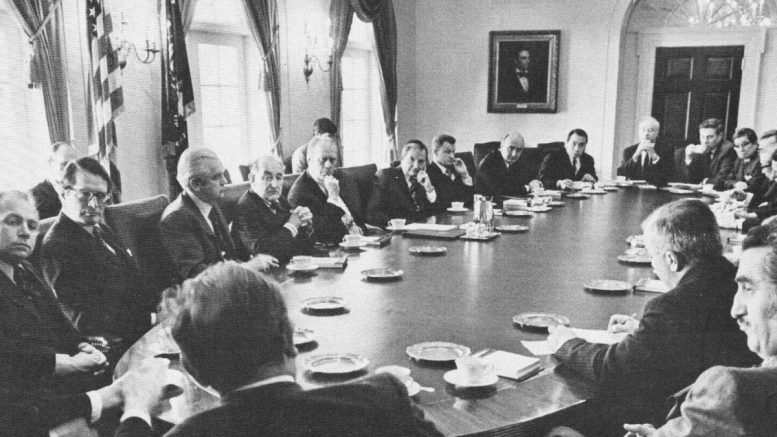
Trilateral Commission
This account demolishes the “donation” narrative. Epstein did not buy his way in. He was personally recruited by David Rockefeller because he possessed skills the network required.
But Epstein was not unique. The Trilateral Commission’s membership, according to its own documentation, is drawn from “business, media, academia, public service, labor unions, and other nongovernmental organisations.” This is not a random collection of wealthy individuals. It is a systematic recruitment operation spanning every sector that shapes public opinion and policy.
The Commission’s European Group is explicit about its purpose. According to the Trilateral Commission’s own website, European members “are also committed to the pursuit of the European unification process which remains the driving force under a strong European Group leadership faithful to Europe’s Founding Fathers such as Max Kohnstamm (1973-1976) and Georges Berthoin (1976-1992) who were both close collaborators of Jean Monnet.”
Jean Monnet, the architect of European integration, is described in academic literature hosted by the European Commission’s own library as having established the European project “with a particular character (marked by technocracy and elitism).”
The Trilateral Commission’s website celebrates this legacy: “The progress of the European Community over the past decades, to fold into a broader and deeper European Union since, has validated the vision of the Commission’s founders.”
This is not a conspiracy theory. This is the Commission describing itself. The European Union, in this telling, represents the successful implementation of Trilateral principles: supranational coordination of policy by unelected elites, insulated from the inconvenience of democratic accountability.”
Mandelson Resigns: The Prince of Darkness Meets the Dawn of Accountability
Is it possible for a man to dedicate his life to a Party while simultaneously entangling his private life, clubs, and finances with a convicted predator?
The Trilateral Connection
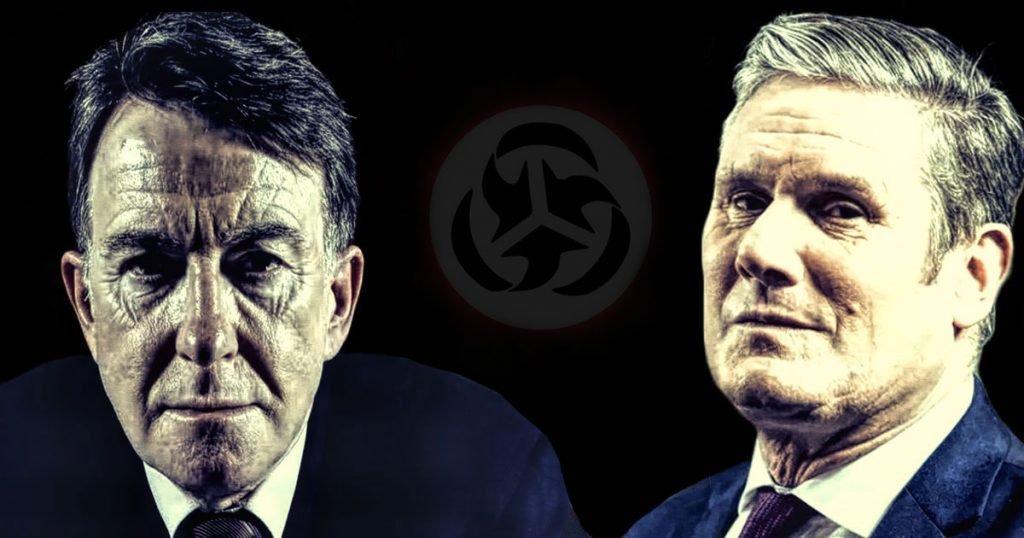
Mandelson, Starmer both members of globalist elite organisation the trilateral commission
The government’s current defence, that they were “unaware” of these specific financial links, is an admission of catastrophic failure. Sir Keir Starmer’s decision to appoint Mandelson as US Ambassador last year, despite the common knowledge of his Epstein ties, was a signal that the “adults in the room” prioritised elite networks over ethical clarity.
The fact that Starmer, Mandelson, and Epstein himself all belonged to the Trilateral Commission, that secretive forum where global financial and political elites shape policy with no accountability and far from public scrutiny, is more than just coincidence. It illuminates the interconnected networks of power that bind these figures together. Out of 650 MPs, Starmer was the only one invited to join this exclusive club in 2019. This shared membership in one of the world’s most exclusive policy-making circles helps explain why certain establishment figures, despite maintaining troubling associations long after they became indefensible, face no real consequences.
There is an old saying, often attributed to Sun Tzu: if you wait by the river long enough, the bodies of your enemies will float by. Jeremy Corbyn, who Mandelson once infamously boasted of trying to “undermine every single day,” might be forgiven a wry smile this weekend. The Prince of Darkness spent years waging war on Labour’s socialist wing, using every ounce of his considerable influence to destroy a movement that threatened the very elite networks in which he was so deeply embedded. Now those same networks have brought him to ruin.
Dr Judith Reisman: MKULTRA, KINSEY & ROCKEFELLER: Instruments of the New World Order