

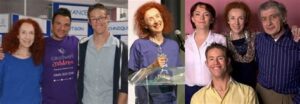
This is an extraordinary and inspiring story of our dear friend Linda Scotson and her children.
Since all areas of the brain infuence breathing in different ways the effects of abnormal breathing on brain injuries also varies depending which areas of the brain are involved
Released today in the film “Breathe,” a documentary that highlights Linda’s unique work, a personal story from tragedy to triumph and the individual stories behind it. Oxygen therapy and Linda’s unique technique has produced miracles that main stream medicine would deny is EVER possible.
Oxygen therapy is denied to the sick, except to those who are fortunate to find it by chance, this is due to the corrupt medical system controlled by satanic Rockefeller et el and big PHARMA parasites who have ensured that not only the treatment is not made readily available in the Western World’s medical establishments, but that the knowledge of its TRUE benefits is never taught to medical students and their tutors.
We think you will enjoy it! Also we would encourage you to pass it on to others since the message is so positive!
Linda was an artist and poet. She recalls that It was an idyllic day in early autumn, when four months after his father’s death and three days after his home birth her apparently heathy, happy new born son Doran began to seizure. This was the first sign of an undetected blood incompatibility. She drove Doran at breakneck speed though winding country lanes to the hospital that eventually saved his life.
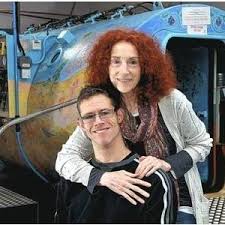 Two weeks later on the day before Doran was discharged his Doctors told Linda her son had severe athetoid cerebral palsy and probable visual impairment and bilateral hearing loss. They explained that Doran would never be able to sit, stand, walk independently or feed himself and was unlikely to have any form of speech; he would not grow normally, any understanding he might have had would be frustrated by his sensory motor loss.
They suggested, because of the gravity of Doran’s brain damage and since she was now a single parent with Doran’s elder sister Lili to look after, that he went into care. When Linda refused, they suggested he be permanently sedated or he would cry continuously. Linda felt that sedating Doran denied him opportunity to relate to the world around him. She politely handed back the prescribed phenobarbitone, taking Lili’s hand as the nurse placed Doran’s carry-cot into their car she explained to her daughter they had begun an extraordinary adventure.
Once home Linda found that as she moved about the room with Doran cradled in one arm while the other took on the practical household tasks of the day, his crying ceased and he seemed more at ease with the world around him. Keeping Doran against her body would allow him to feel her heart beats, her movements…and her breath, Linda wondered whether this could be restoring vital information that his severe motor -disability would otherwise have denied him.
Out of the blue Doran has more devastating seizures, he was diagnosed with kidney failure and spent a month on dialysis, Linda and Lili were given beds in Guys Hospital and initiated into the rituals of his 24 hour intensive care.
The hospital became another University of Life .. then to his kind doctors joy and amazement Doran’s kidney’s recovered completely… the brain injury was another matter… nothing, they repeated could be done.. better accept and move on….
Linda saw the world differently…She surmised that if neurologically challenged children had abnormal breathing perhaps the developing brain was just not getting enough oxygen?
Gradually she found herself working twelve hours a day on programmes she believed would assist his breathing… her dedication paid off, at the age of six Doran was walking and becoming an engaging social little boy… but his movement was still abnormal. Linda recognised that to help Doran and others she needed to find a better faster way to get results, she would have to retrain as a scientist.
She wrote a book describing the journey Doran, Lili and herself had made so far. The book was translated into many languages and became an international best seller. Parents from all over the world contacted her asking for help.
Linda initially hoped that her experience might influence doctors to look at the effect of breathing quality on the developing brain… but one mother’s observation and one child’s case history were not enough to make a difference to the established way of thinking.
Finally she sent a copy of her book to the head of Cerebral Studies at University College London, his name was Professor Patrick Wall, a powerful but often frustrated proponent of brain plasticity.
Professor Wall was interested in Linda’s theory that the problem was not so much the brain but the failure of the respiratory system to supply the nutritional oxygen needs necessary to rebuild developmental processes adequately. Unexpectedly she had gained an extraordinary friend, mentor and ally.
On his recommendation Linda became a PhD Qualifier at UCL this meant she was able to study three years in one and then begin her research intended to lead to a doctorate and the probable incorporation of her findings and the therapeutic approach emerging from them, into the NHS.
In the midst of looking at oxygen as a possible epigenetic trigger ( after all why would a cell be bothered to disclose its identity without the presence or absence of oxygen on which it entirely depends?) Linda also met Dr Phillip James who was pioneering hyperbaric oxygen therapy. Dr James was impressed enough by her knowledge to invite her to train in hyperbaric oxygen therapy management at Dundee University Hyperbaric Faculty .
Gradually Linda put together a number of statistical studies that supported her hypothesis that abnormal brain development affects breathing quality, but she still had no therapeutic answer. Then quite suddenly she recounts waking up one morning to find “everything I had learnt and investigated for so many years had neatly rearranged itself inside my head into a simple equation. This was that breathing pressures affect the switching on of genes, blood circulation and oxygen delivery to the brain, the major source of these pressures come from the work of diaphragm …everything is dynamically interconnected… the therapeutic pressures I should use therefore must be soft and light like a breath and first of all they should move round the rib-cage to enhance the quality of the diaphragm.”
At this point Linda was able to found the charity Advance and to raise enough money to purchase and refurbish a property in East Grinstead. Throughout, Linda points out how fortunate she was to have the help and support of her daughter who chose to work alongside her mother to help improve the quality of life for those in need.
Doran who was by now in late twenties, responded impressively to the new approach, his height rose from five feet eight to six feet as his breath expanded his spine. His posture was straighter, his speech clearer and richer….eventually he began running two half marathons a year and became a talented artist.
Linda and Lili continue to research and to believe the way we breathe has a profound effect on all aspects of our lives .
Advance Centre for The Scotson Technique (TST)
Innovative therapies, supported by research, proven by practice
The Scotson Technique – WHY
Breathing Quality Matters because:
- Many symptoms commonly associated with abnormal neurological conditions are actually the result of abnormal breathing.
- Besides providing the oxygen which is essential to the life of the body, breathing affects: heart rate, circulation, posture, body structures, blood pressure, limb movement, speech, the development and function of the digestive organs, blood flow to and from the brain, sleep, cognitive ability, learning and brain growth, emotional state, health, immunity and healing. All areas of the brain can affect and are affected by the way we breathe.
- Breathing quality is affected by both neurological abnormality and brain injury and the effect of abnormal movement or lack of movement on respiratory development.
Address and Telephone
The Bradbury House
6 Station Road
East Grinstead
West Sussex
RH19 1DJ
Tel: 01342 311 137
Int: +44 1342 311 137
Fax: 01342 305 159