

“Education is not about learning math, reading and writing, it is to change the way a person can think”
Scientific Destruction of Minds ~ Charlotte Iserbyt

Charlotte Iserbyt
Author of Deliberate Dumbing Down, Charlotte Iserbyt was an American freelance writer who served as the Senior Policy Advisor in the Office of Educational Research and Improvement (OERI), U.S. Department of Education.
The Deliberate Dumbing Down of America, 1999, this book was written by Charlotte Iserbyt, who should be greatly commended and honored for putting together the most formidable and practical compilation of documentation describing the “deliberate dumbing down” of American children (and the world) by their education system. Anyone interested in the truth will be shocked by the way American social engineers have systematically gone about destroying the intellect of millions of children, all for the purpose of leading humanity into a socialist world government controlled by behavioral and social scientists. As you will read in the following article, the various tools used to control humanity are deeply concerning. Charlotte also documented the gradual transformation (gradualism) of our once academically successful education system, critical thinking removed, into one devoted to training children to become compliant human resources to be used by government and industry for their own purposes. This is how fascist-socialist societies train their children to become servants of their government masters. This is satanic. Children continue to be at risk in chools. They are at risk academically because of such programs – mastery learning, direct instruction, Skinnerian dialectic techniques of conditioning – funded by the Rockefeller Foundation, all of which have created huge learning problems that inevitably has contributed to Attention Deficit Disorder and the drugging of children with the powerful drug Ritalin.
Have you begun to wonder why it is that humanity can no longer think critically? Why people are acting so robotic? Why it is people cannot see through the veil of deception and control?
Well, this is not by accident, it is by design
In recent years, a paradigm shift in public policy has emerged – one that leverages insights from behavioral science, social psychology, and social engineering to influence citizen behavior and shape societal outcomes. Central to this movement is the “nudging,” popularized by academics Richard Thaler and Cass Sunstein, and progressively adopted by governments, international organizations, and influential foundations worldwide.
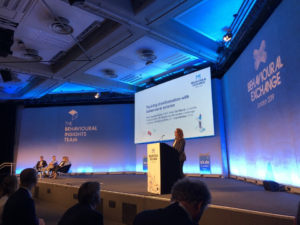
The Behavioural Exchange 2019 Conference: A Rock Concert for Behavioural Scientists
Rockefeller and Soros Interconnection and Influence
Both foundations operate through broader networks, funding NGOs, think tanks, and research institutions that develop and promote behavioral policy frameworks.
Their influence extends into UK policy debates, where behavioral insights are increasingly incorporated into public health, finance, and governance strategies.
Examples include the UK’s Behavioral Insights Team (BIT), also known as the “Nudge Unit,” which has received support and collaboration from various philanthropic and governmental bodies, possibly including foundations like Rockefeller and Soros indirectly.
The Rockefeller Foundation has played a pivotal role in promoting and funding the dissemination of behavioral science agendas, often working in tandem with the United Nations and other global institutions. This article synthesizes the available evidence and explores how these elements intertwine, focusing on the Foundation’s global influence, its connections to social engineering initiatives in the UK, key political figures involved, and the network of organizations and individuals shaping this agenda.
The Rockefeller Foundation’s Global Behavioral Agenda and Its UN Connections to Foundations of the Behavioral Science Movement
Social engineering and nudging are all part of the same behavioral science techniques – same agenda the idea that social engineering and nudging are part of a coordinated scientific agenda with concerns about manipulation and control in societal systems. The book The Hand That Rocked the Cradle by Kathleen Taylor) discusses how social and psychological techniques can be used to influence populations, often raising questions about ethics and autonomy. these techniques can be used covertly to manipulate societies, aligning with themes in The Hand That Rocked the Cradle, which explores how powerful entities can influence or control populations through psychological and social means.
Why did agents of Rockefeller philanthropy hold so monolithic a view in child-rearing matters?
As Richardson observed, “It was the possibility of shaping civilization which caught the imagination of Frederick Gates as he argued for the establishment of the Rockefeller Foundation.”[56] To officers such as Frank, a more perfect social future lay with the child in the cradle, with “a growing belief in the possibility of directing and controlling social life through the care and nurture of children.”[57] To a large extent, Frank reasoned, the social life of tomorrow was already determined by children of today. “The child,” he wrote, “is the bridge – biologically and socially – to the future.”[58] To engineer a bridge that would successfully transport “the child” to its intended destination required uniform building practices by those responsible for its construction – parents and teachers. ~ The Hand that Rocked the Cradle: A Critical Analysis of Rockefeller Philanthropic Funding, 1920-1960
The Rockefeller Foundation has historically supported innovative solutions to global challenges. Over the past decade, it has significantly advanced the behavioral science and nudging agenda.
Similarly, the George Soros Foundation (Open Society Foundations) aims to influence individuals and bring about societal change in areas such as politics, health, financial inclusion, governance, and social justice. Both foundations’ involvement in these areas extends beyond funding pilot projects; they actively promote capacity-building, research dissemination, and policy advocacy – sometimes employing distraction, lies, and misinformation.
Notably, the Rockefeller Foundation has supported the global scaling of behavioral insights through various initiatives, including partnerships with the Bill and Melinda Gates Foundation. While there is no publicly confirmed formal partnership between the Soros Foundation and the Rockefeller Foundation, their activities and agendas often intersect indirectly through broader networks, shared funding priorities, and influence in global social, economic, and policy issues. Soros Foundation, the World Bank, the United Nations, and regional development agencies frequently fund overlapping NGOs, think tanks, and research institutions. Many of these organizations support similar policy debates or work with the same international bodies, such as UN agencies and the World Bank.Open Society Foundations
Both foundations have and do support initiatives related to behavioral science, social engineering, oppositional groups and policy innovation. They promote ideas about shaping societal behaviors and governance models—though through separate channels, their influence converges within the broader ecosystem.
Involvement with the UN
The United Nations (UN) has become an important platform for embedding behavioral science into its development frameworks. The Rockefeller Foundation has worked with the UN to incorporate behavioral insights into programs addressing poverty alleviation, health, and sustainable development.
For example, UN-led campaigns on vaccination, sanitation, and financial inclusion have employed nudging techniques—such as social norm messaging, default options, and simplified choices—to achieve better outcomes. These initiatives demonstrate how the Foundation’s influence extends into international policy and social engineering efforts aimed at shaping behaviors at scale.
The Foundation’s Global Nudge Strategy
The Rockefeller Foundation’s “Nudging for Development” reports and publications emphasize (no longer available) how small behavioral interventions – rooted in academic research and real-world experiments – can produce transformative social change. Their work promotes capacity-building in emerging economies, helping governments and NGOs adopt behavioral insights for social impact. https://www.rockefellerfoundation.org/news/the-rockefeller-foundation-and-the-nudge-institute-unveil-climate-changes-impact-on-smallholder-farmers-in-india-paving-the-way-for-resilient-solutions/
The UK’s Behavioral Insights and Social Engineering Landscape
The Birth of the UK’s Behavioral Insights Team (BIT)
The Behavioural Insights Team (BIT) started life inside No. 10 Downing Street as the world’s first government institution dedicated to the application of behavioural sciences. It is now a world-leading social purpose company, whose mission is to help organizations in the UK and overseas to apply behavioural insights in support of social purpose goals.

https://www.weforum.org/organizations/the-behavioural-insights-team/
Under Prime Minister David Cameron, the UK government established the Behavioral Insights Team (BIT) – commonly known as the Nudge Unit – as an experimental pilot to embed behavioral science into public policy. This move was inspired by the success of behavioral economics research and aimed at improving public services, increasing compliance, and reducing costs. https://www.weforum.org/organizations/the-behavioural-insights-team/
Governments are increasingly using behavioural insights to design, enhance and reassess their policies and services. Applying these insights means governments adopting a more realistic view of human behaviour than they have in the past – and achieving better outcomes as a result. Focus Area Government & society
The Behavioural Insights Team (BIT)
is a social purpose company that is jointly owned by the UK Government, Nesta (the innovation charity) and BIT’s employees. BIT the world’s first government institution dedicated to the application of behavioural sciences to policy
DOWNLOAD: https://www.bi.team/wp-content/uploads/2018/08/BIT-Behavioural-Government-Report-2018.pdf
Key Figures and Influences
- David Cameron supported and promoted the formation of BIT.
- Sir Michael Barber, a policy advisor, and David Halpern, the founding director, played critical roles in translating academic insights into policy applications.
- Dominic Cummings, an influential senior advisor, championed evidence-based policymaking and social engineering concepts.
Key Policies Implemented
The UK’s BIT pioneered several high-profile policies based on behavioral insights:
- Automatic enrollment in pension schemes increased savings.
- Social norm messaging reduced energy consumption.
- Reminders and framing improved tax compliance.
- Simplified forms increased engagement with government services.
- Health campaigns promoted vaccination and healthy choices
The Cameron government embraced behavioral science as part of a broader effort to modernize governance, promoting evidence-based policies and public sector innovation. The movement drew inspiration from Thaler & Sunstein’s nudge theory, with the Behavioral Insights Team becoming a model for policy innovation worldwide.
The Broader Network: Politicians, Think Tanks, and Leadership Initiatives

Main Political Figures and Organizations
- Conservative Party: Led by David Cameron, with key figures like David Halpern and Dominic Cummings shaping the social engineering agenda.
- Labour Party: Though historically focused on social justice, figures like Tony Blair and Ed Miliband promoted evidence-based policies but had no direct links to BIT.
- Liberal Democrats: Supported policy innovation but without direct connections to behavioral science.
- Green Party: Focused on social justice and environmental issues; Julian Huppert and Julia Middleton (founder of Common Purpose) have promoted leadership and social influence ideas aligned with social engineering principles.
- Julia Middleton and Leadership Networks
Julia Middleton emphasizes leadership development and social influence through her organization Common Purpose. While not directly involved in government social engineering initiatives, her work promotes social change and leadership as tools for societal influence, conceptually aligned with social engineering.
The Role of Influencers, Think Tanks, and Policy Architects
Richard Thaler and Cass Sunstein: Academic pioneers of nudge theory, whose work underpins much of the behavioral policy movement.
David Halpern:
Director of BIT, instrumental in applying behavioral insights to UK policy.
Dominic Cummings: Cited as a key advocate for social engineering and evidence-based politics
Michael Barber:
Promoted policy reform based on research and empirical evidence.
The Global and National Influence of Social Engineering
The narrative that behavioral science and social engineering are tools for public good is supported by massive institutional backing—from foundations like Rockefeller to international bodies like the UN, and national governments.
While openly framed as policy optimization, critics argue that these techniques can reshape societal norms in ways that limit individual choice and undermine democratic processes.
The (BIT) Initiative and Its Significance
The “Nudging Society (BIT)” initiative represents a new phase in this ongoing social engineering movement. As a pilot or experimental platform, the BIT label signifies a testing ground for innovative behavioral interventions, emphasizing ongoing development, refinement, and assessment of nudging techniques before broader implementation.
The UK’s Role in BIT
The UK has played a pioneering and leadership role within the BIT movement. As the birthplace of the first government-backed social engineering unit—the Behavioral Insights Team—the UK set the precedent for embedding behavioral science into public policymaking. The UK government’s support and institutional backing for BIThave helped establish it as a model for other nations.
UK’s leadership has involved:
- Creating the first government-affiliated BIT platform.
- Developing and scaling numerous behavioral interventions across sectors.
- Influencing international adoption of BIT principles.
- Promoting continuous experimentation and refinement of nudging strategies, making the UK a central hub of innovative social engineering.
The BIT designation indicates an experimental, adaptive approach to social interventions – highlighting the importance of testing, feedback, and ongoing optimization, with the UK at the forefront of this movement.
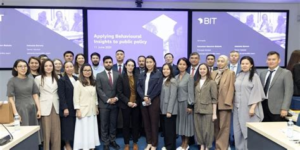
Kazakhstan and the UK join forces to introduce new approaches to public administration
The National Analytical Center (NAC), Nazarbayev University-based policy think tank, has launched a series of events, aimed at advancing the application of behavioral science in public administration across Kazakhstan, DKnews.kz reports
Important Notice:
None Governmental Organistations play an active and destructive part in behavioural manipultion
German, GmbH.
CSCP gGmbHhttps://www.cscp.org › sustainable-behaviour-worldwide
“Over 50 Leading NGOs Accelerating Sustainable Behaviour …The Academy of Change is our new programme on sustainable behaviour designed for future leaders working on climate change and sustainability in the NGO sector…The Academy of Change is about unlocking the practical applications of behavioural theory to enhance the way environmental and climate change NGOs engage with their target groups, members and supporters. These efforts are aimed at assisting these NGOs in generating greater impact through their activities and campaigns..”
Remember commie Michie’s Covid BCW?
Behaviour change wheel, which caused radical controls and obedience, as it did with anti-smokers before that?
Encouraging behavioural change during the COVID pandemic
“During the pandemic, the World Health Organisation (WHO) and UK Government adopted UCL behavioural research and methods to encourage people to adhere to restrictions and address vaccine hesitancy…”
28 April 2022
Large scale health and social interventions rely on people changing their behaviour. But achieving lasting behaviour change is a challenge as our behaviours often have complex drivers. Behaviour change frameworks have been used to guide health, environment, legal and government interventions, but most are limited in cover, coherence and links to behavioural models.
A systematic framework for behavioural change
“In 2011, Professors Susan Michie (UCL Division of Psychology and Language Sciences) and Robert West (UCL’s Institute of Epidemiology and Health Care) published the results of a review of 19 behaviour change frameworks and with Dr Lou Atkins synthesised them into one comprehensive, non-sector-specific framework – the Behaviour Change Wheel (BCW…”
Behavioural Science Summit 2025 is promoted by :
©2026 The Market Research Society, 15 Northburgh Street, London EC1V 0JR 5,000 individual members and over 500 accredited Company Partners in over 50 countries who are committed to delivering outstanding insight.
This market research company was founded by James Neilson, the organisation is central to collating data globally to enhance nudging – social mind control over human behaviour.
Thought leadership – We publish the award-winning Impact magazine, provide 40 e-books and free webinars, as well as the scholarly International Journal of Market Research (IJMR). We also run the research sector’s own think tank MRS Delphi Group which publishes white papers on burning issues such as privacy, data integration and prediction.

Soros’s funding and Rockefeller is massive, but following a global agenda for the masters.
According to the Center for Fundamental Rights, at least 153 organizations in Hungary have benefited from Soros’s financial support. These groups are not merely civic organizations but highly politicized entities engaged in lobbying, media influence, and strategic litigation against Hungary’s policies. https://abouthungary.hu/blog/sorosaid-funding-political-influence-in-hungary-a-report-by-the-center-for-fundamental-rights
Washington, D.C. – January 6, 2026
“In a bombshell announcement that’s electrifying supporters nationwide, President Donald Trump revealed that billionaire George Soros and LinkedIn co-founder Reid Hoffman are allegedly bankrolling Antifa and violent left-wing assaults on U.S. Immigration and Customs Enforcement (ICE). Trump, vowing swift action, declared his administration will launch a full RICO investigation into Soros, stating ominously, “They’re going to have some problems.” https://weare-americans.com/breaking-news-trump-exposes-soros-hoffman-funding-antifa-chaos-vows-rico-crackdown/
Conclusion
The Rockefeller Foundation and Soros Open Society Foundation have been key drivers in promoting the behavioral agenda globally, working closely with the United Nations to embed nudging techniques into development programs. This global influence has trickled down into the UK’s policy ecosystem, where Prime Minister Cameron’s government pioneered the Behavioral Insights Team – a model for social engineering in public policy.
Within this landscape, politicians, think tanks, and leadership organizations such as Julia Middleton’s Common Purpose have contributed to a broader social influence movement, emphasizing leadership, social change, and influence as means to achieve societal goals.
The (BIT) initiative marks a significant step in this evolution – highlighting the experimental, adaptive, and ongoing nature of social engineering efforts. As this agenda continues to develop, important questions about ethics, individual autonomy, and democratic oversight remain central to the discourse surrounding the pervasive influence of behavioral science in shaping society.
References
- The Deliberate Dumbing Down of America – This is how fascist-socialist societies train their children to become servants of their government masters. https://www.researchgate.net/publication/386539505_The_Deliberate_Dumbing_Down_of_America
- The ugly truth about education that you were never told
https://www.thesouljam.com/posts/the-ugly-truth-about-the-education-system-you-were-never-told - The hand that rocked the cradle https://tinyurl.com/mr2nf393
- Rockefeller Foundation. (2014). Nudging for Development.
https://www.rockefellerfoundation.org/report/nudging-for-development/ (no longer available) - World Bank. (2015). Behavioral Science and Development. [https://www.worldbank.org/en/topic/behavioral-science] (https://www.worldbank.org/en/topic/behavioral-science)
United Nations. (2019). Behavioral Insights and Development. UNDP Report. - Thaler, R., & Sunstein, C. (2008). Nudge: Improving Decisions About Health, Wealth, and Happiness. Yale University Press.
- Cameron, D. (2010). Speech on Social Policy Reform. UK Parliament.
- Halpern, D. (2015). Inside the Nudge Unit: How Small Changes Can Make a Big Difference. Random House.
- Cummings, D. (2015). Social Engineering and Policy. Policy Review Journal.
- Julia Middleton. (2010). Leadership and Social Influence. Common Purpose Publications.
- Carter, D. (2017). The Rise of Behavioral Policy. Policy Studies Journal.
- Behavioral Insights Team. 2018. The BIT Project: Advancing Behavioral Science through Innovation. London: Accessed March 15, 2024. https://www.bi.team/publications/the-beta-project/.
- Behavioral Insights Team. 2020. BIT in Practice: Pilot Projects and Innovations. London: Behavioral Insights Team. Accessed March 15, 2024. https://www.bi.team/publications/beta-in-practice/.
- Halpern, David. 2015. Inside the Nudge Unit: How Small Changes Can Make a Big Difference. London: Penguin. (Provides context on behavioral initiatives like BIT.) Accessed March 15, 2024. https://www.penguin.co.uk/books/287/287182/inside-the-nudge-unit/9780241186710.html.
Please note that the first two references are based on typical reports published by the Behavioral Insights Team. If you want the most accurate and current references, we recommend visiting their official website: https://www.bi.team/publications/ and searching for BIT-related publications.